

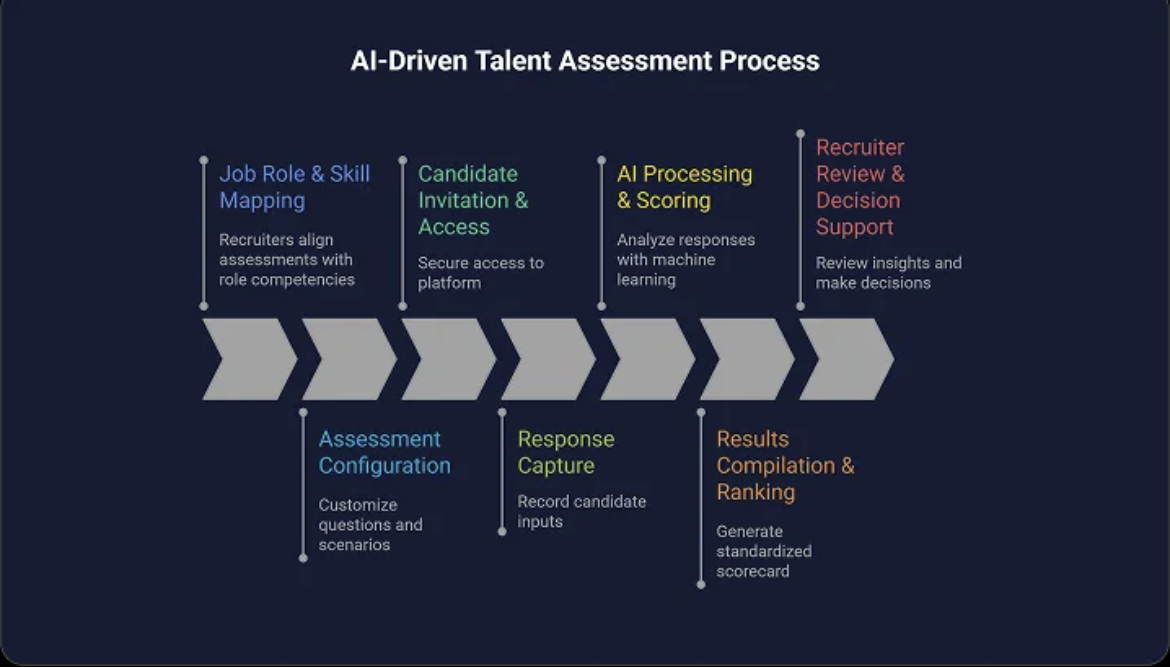
AI-driven simulation and assessment used to hire better, ramp faster, and validate readiness before agents touch real customers or patients.
Eliminate:
Long ramp times for new hires
Inconsistent readiness at go-live
Hiring people who “interview well” but fail in production
High early attrition (first 90 days)
What’s included:
Scenario-based simulations (calls, chats, role-plays)
Pre-hire and post-hire readiness scoring
Risk-based scenario design (high-impact interactions)
Performance baselines by role and queue
Outcomes:
↓ Ramp time by 20–40%
↓ Early attrition
↑ Confidence and consistency at go-live

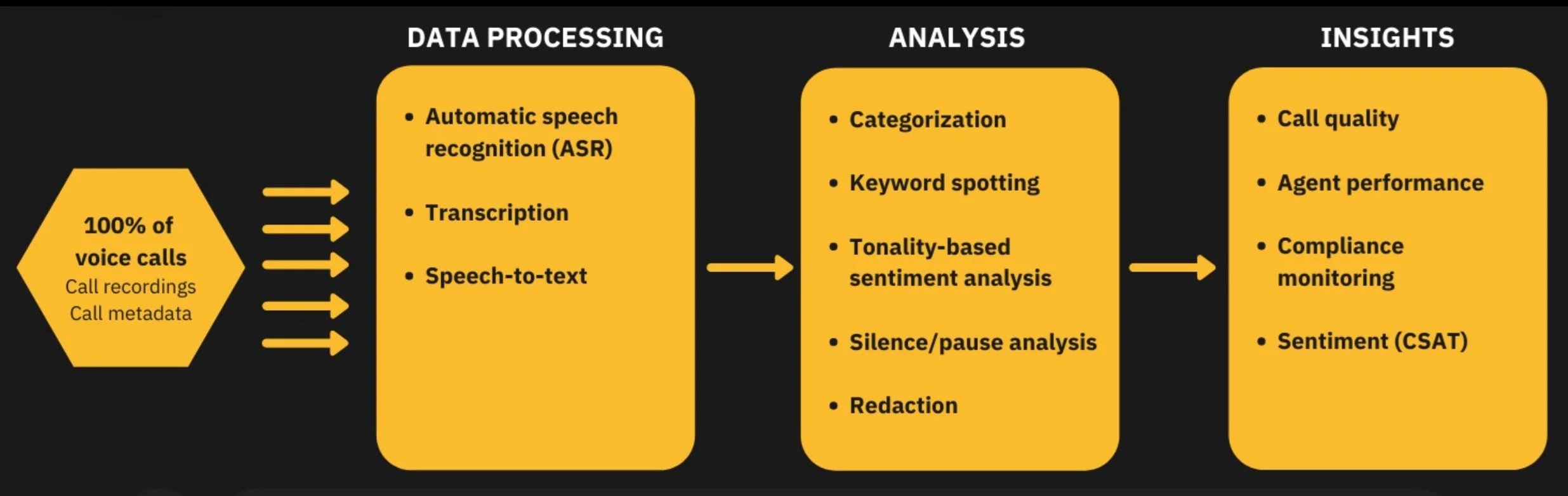
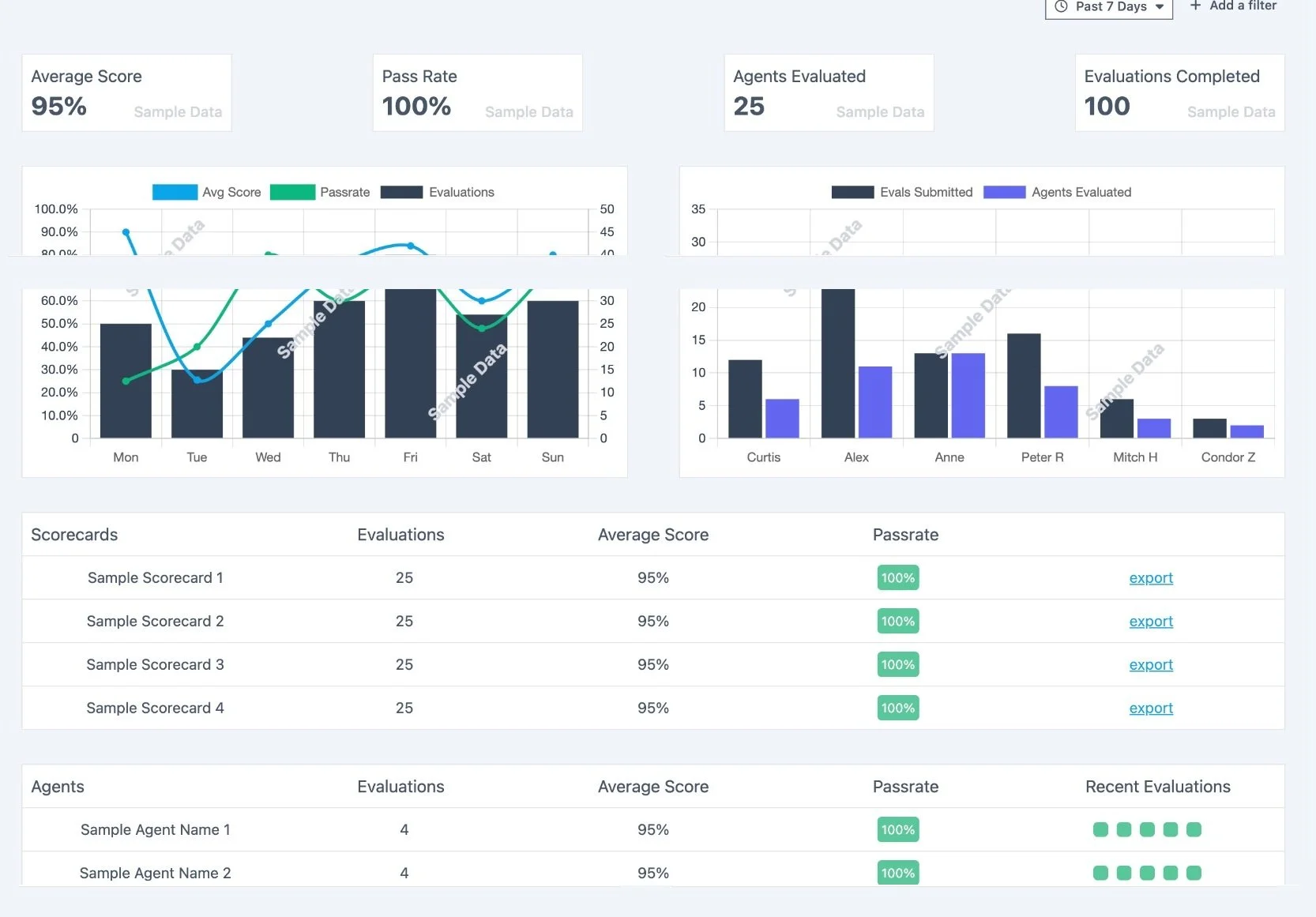
A modern QA + analytics layer that turns interactions, behaviors, and activity into objective, defensible performance insight—not subjective scorecards.
Eliminate:
Manual QA that doesn’t scale
Inconsistent scoring across evaluators
Little correlation between QA and real outcomes
Leaders “flying blind” on performance drivers
What’s included:
AI-assisted QA and speech/text analytics
Targeted evaluation frameworks
Behavior-to-outcome correlation
Performance dashboards for leaders and coaches
Outcomes:
↑ QA coverage (5–10x without more staff)
↑ Score consistency
Clear identification of top/bottom performance drivers

Eliminate:
Managers overwhelmed by coaching expectations
Coaching that’s generic or inconsistent
No proof coaching actually changed behavior
Training, QA, and ops working in silos
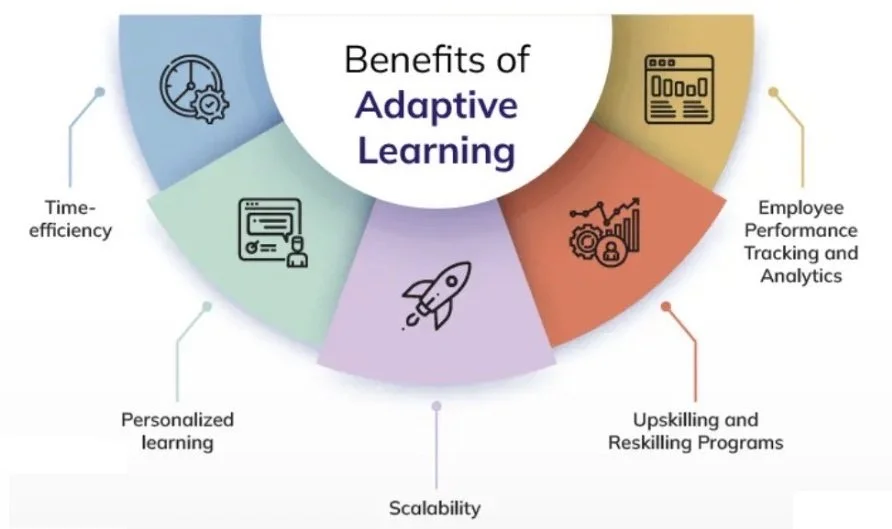
Closed-loop coaching that tells agents exactly what to practice, how to practice it, and proves improvement—without relying on managers’ bandwidth.
What’s included:
Personalized coaching recommendations
Simulation-based practice tied to real QA gaps
Learning paths by role and proficiency
Coach effectiveness measurement
Outcomes:
↑ Speed to proficiency
↑ Agent engagement
↑ Measurable behavior change tied to QA